Water softener installation in Calgary: sizing it right, and what the job actually involves
Written for Calgary homeowners
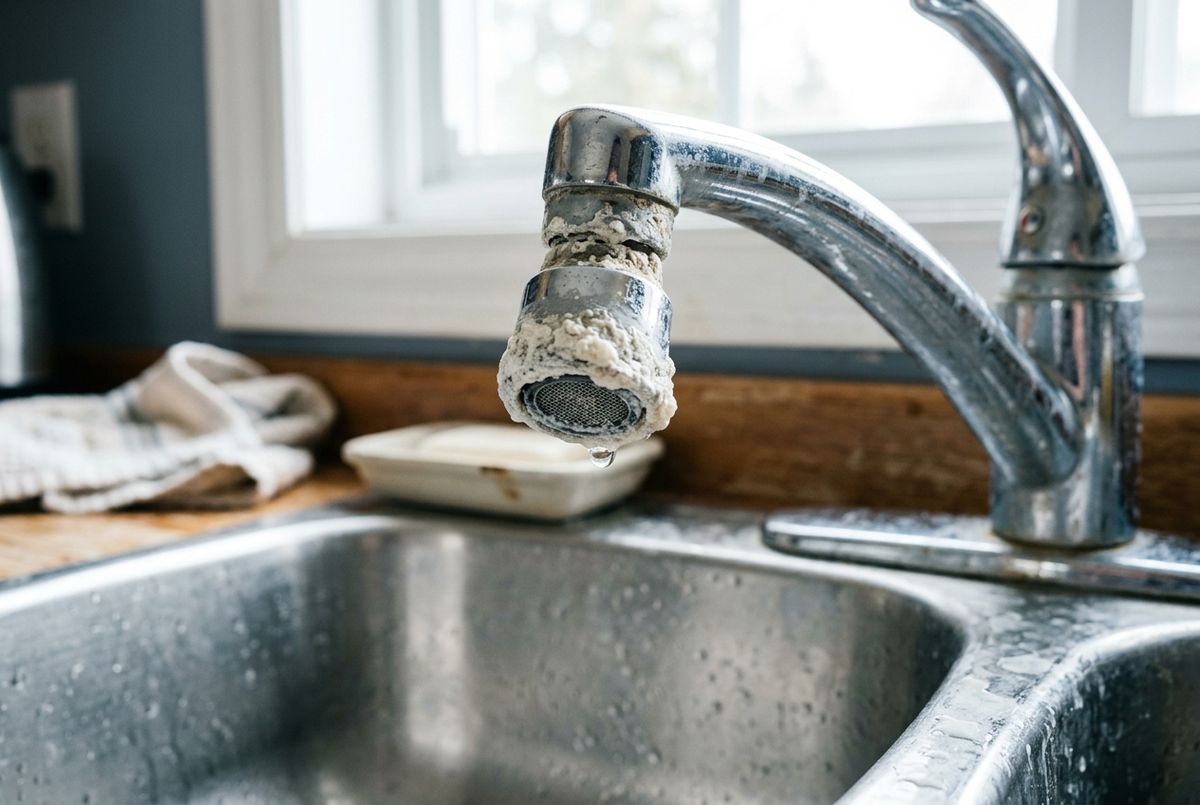
Short answer: A whole-home softener install is usually a half-day job for one plumber, and what decides whether it works is sizing — which turns on which treatment plant feeds your house, and the City publishes no map of that. For most four-person Calgary households a single cubic foot of resin (the units sold as "32,000 grain") is the right size, regenerating every five to twelve days. Installed cost runs roughly $1,200–$3,500 for a salt-based unit — a planning figure, not a quote.
Once you've decided you want one, the useful questions are no longer "is Calgary water hard." They're what size, where it goes, whether the City needs to see it, and what it costs every year afterwards — questions the quotes you're collecting mostly don't answer. Still deciding? Our hard water page has the full City dataset, the salt-free comparison and the case for not buying one at all.
Size it from your own water, not a city average
Softeners are sized by the grains of hardness they remove between regenerations: daily water use multiplied by hardness. Both halves are knowable in Calgary, so there's no reason to guess.
The City publishes hardness for both treatment plants, and they differ meaningfully. In 2025 Bearspaw ran roughly 141–200 mg/L of calcium carbonate and Glenmore ran 181–274 mg/L. Divide by 17.1 and that's about 8.2–11.7 grains per gallon on Bearspaw and 10.6–16.0 on Glenmore. The City does not publish grains per gallon — that conversion is ours.
Source: The City of Calgary — Water quality and water hardness data (2025 figures).
The City also states the average person uses about seven cubic metres — 7,000 litres — a month: roughly 233 litres, or 61.6 US gallons, per person per day.
Source: The City of Calgary — Water efficiency plan.
Together, for a household of four:
| Four-person household | Bearspaw, softest season | Glenmore, hardest season |
|---|---|---|
| Hardness | 8.2 gpg | 16.0 gpg |
| Water used per day | 246 US gallons (4 × 61.6) | |
| Grains to remove per day | ~2,000 | ~3,900 |
| Days between regenerations, 1 cu ft at an efficient salt setting | ~9.9 | ~5.1 |
| Days between regenerations, 1 cu ft at a high salt setting | ~11.9 | ~6.1 |
The number on the box is not the capacity you get
A cubic foot of resin is sold as a "32,000 grain" unit, but that rating is measured at a salt dose nobody sensible runs. An industry technical article puts it plainly: the same cubic foot delivers about 24,000 grains at 8 lb of salt per cubic foot and about 20,000 grains at an efficient 5 lb dose — 4,000 grains of softening per pound of salt instead of 3,000. Push to 12 lb and efficiency falls to 2,500. So a lower salt setting buys nearly the same result for meaningfully less salt; you just regenerate more often. The table above uses 20,000 and 24,000 grains, not 32,000, which is why its intervals are shorter than a dealer's chart.
Source: Water Conditioning & Purification — "Softener efficiency: it's not just about the salt" (2015). Industry technical press, not a standards body.
Either way: one cubic foot handles a typical Calgary family of four, regenerating every five days at the hard end and twelve at the soft end. If you're steered towards a 48,000-grain unit, ask what daily grain load was calculated. A larger unit isn't wrong — it regenerates less often and uses salt more efficiently per grain — but that should be a decision with a number behind it, not a default.
We can't tell you which plant serves your house
The City publishes no neighbourhood map of plant coverage, and the system can shift load between the two. That matters here: the Glenmore end is roughly twice as hard as the Bearspaw end, and it changes your sizing. Call 311 and ask before anyone quotes you, and have your installer test your own tap — iron changes the calculation too, and only a test shows it.
What the job actually involves
A straightforward install is commonly quoted at three to five hours, and the ways it goes wrong are all about where the unit sits rather than the unit itself.
- It goes on the incoming line, after the main shut-off and before the water heater. That order gets softened water into the tank, where hardness does most of its damage — a big part of why Calgary tanks come in under the lifespan on the box.
- The outside taps stay on hard water, deliberately, and most installs leave the kitchen cold tap hard too for an unsoftened drinking source. Decide that split before install day — moving it later is a second billable visit.
- It needs a drain within reach and a 120V outlet — brine has to go somewhere on every regeneration, and the metered valve needs power to count your water use. Neither being close by is the commonest reason a quote beats the neighbour's. Keep the brine tank reachable while you're at it: you'll carry salt to it several times a year.
- Insist on a proper bypass valve, so a failed unit on a Sunday is an inconvenience rather than a reason to call an emergency plumber — and make sure you're shown how to use it.
The drain connection is the detail people get wrong
The drain line must not be pushed into a drain pipe and sealed. It has to discharge with an air gap — open vertical space between the hose end and whatever receives it — so nothing from the drain can siphon back into your drinking water. An industry source gives the gap as at least two and a half times the drain line's diameter, and never under 1½ inches.
Source: Greg Reyneke — Residential water softener drain installation tips. Industry practitioner, not a code document.
What we could not verify: the exact National Plumbing Code clause and dimension. The 2020 code has been in force in Alberta since April 1, 2023, but it isn't published free of charge, so we can't quote it and won't pretend otherwise. The principle isn't in dispute; the dimension for your install is a question for your plumber or the City's inspector, so ask before the hose is cut.
Code-in-force date: Government of Alberta — Plumbing codes and standards.
Does the City need to see it?
As of September 2026, the City says a plumbing permit is required "when a plumbing system is constructed, extended or altered." The work it lists as not needing one is three things: repairing a leak, replacing faucets and fixtures, and removing a blockage in the drainage.
Source: The City of Calgary — Homeowner electrical and plumbing permits.
Installing a softener means cutting into the water distribution line and adding piping, a bypass and a drain connection — on any plain reading, altering the plumbing system, and none of the three exempt items. But the City names water softeners nowhere we could find, so this is our reading, not a rule we can quote at you. Call 311 first — unpermitted alterations surface years later during a home sale.
Two things the City is explicit about. A permit is required to install a back-flow prevention device, so if your install includes one, that's a stated trigger rather than an interpretation. And the homeowner's permit is $112 plus a $4.50 Safety Codes Council fee — $116.50, rising every January 1. You must own the home, live in it or intend to, and do the work yourself.
Can you legally do it yourself? Plumber is a compulsory certification trade in Alberta, but the rules carry an owner exemption for work on property you own and intend "only for personal and not-for-profit use." For your own home that reads as yes; for a rental or a suite you plan to rent, as no — our reasonable reading, not settled law, so confirm with Alberta Apprenticeship and Industry Training. Full explainer here.
Source: Alberta Tradesecrets — Plumber, classes of individuals.
What it costs — planning ranges only
There is no authoritative public source for water treatment pricing in Calgary — every figure published here, ours included, is somebody's self-report. Treat these as budgeting ranges, not quotes.
A Canadian contractor-quote aggregator publishes installed costs of roughly $1,200–$3,500 for a single-tank salt-based softener, $2,000–$5,500 for a dual-tank system and $4,000–$8,000 for premium dealer brands. It puts labour at 20–40% of the total. Those are contractor-reported figures across Canada, not Calgary-specific and not independently audited.
Ranges as published by HomeStars — Cost to replace a water softener (guide updated August 2026).
What moves the number here is the drain and outlet situation, whether your house has a pre-plumbed softener loop (common after about 2000 — a capped pair of stubs off the incoming line) or the plumber is cutting into your main, and whether you want a hard-water kitchen tap. Get it itemised — our page on what plumbers charge explains why every published rate here is a company's own claim.
Price the rental option separately. Softeners are often sold on a financed or rental contract: ask the total over the term, what happens if you move, and who owns the unit at the end. That's where the gap between a $2,000 purchase and a $6,000 contract lives.
What it costs to run, with the working shown
Nobody quotes you this, and it decides whether you're happy in year three. Using the intervals above and an industry figure of about 40 US gallons per regeneration for a modern valve:
- Water and wastewater: roughly $20–$40 a year. At the Glenmore end, regenerating every 5.1 days is about 72 cycles a year — at 40 gallons each, 10.8 m³. At Calgary's 2026 rates ($1.7409/m³ water plus $1.9050 wastewater, so $3.6459 combined) that's $39 a year. At the Bearspaw end, 37 cycles and 5.6 m³: $20.
- Salt: roughly four to eleven 20 kg bags a year, depending on your plant and salt setting. We're not quoting a salt price — we have no source worth citing, so check your store and multiply.
- Metered regeneration is worth paying for. The same source puts older mechanical valves near 90 gallons a cycle against 34.5 for newer electronics — a fixed-schedule unit regenerating weekly regardless of use lands around 17.7 m³, about $65 a year plus extra salt, for identical soft water.
Regeneration volumes and salt efficiency from Water Conditioning & Purification; rates from The City of Calgary — Residential water rates and billing (2026). The annual totals are our arithmetic, not a published figure from either.
One more thing we could not verify
Whether the City restricts residential softener brine going to the sanitary sewer. The Wastewater Bylaw material we could find addresses commercial and industrial customers and is silent on household water treatment. We won't tell you it's fine and we won't invent a restriction — ask 311 before the drain line goes in.
Afterwards: if your bill moves following the install, work down the leak checklist before blaming the softener. If pressure drops house-wide the softener is a real suspect, but so are other things — sudden versus gradual tells you which. For the wider picture, start at our main Calgary plumbing guide.
Want the sizing checked before you sign anything?
Send us the quote you've been given and the number of people in the house. We'll tell you whether the size and salt setting stack up against the City's hardness data, and whether the drain and permit side has been handled properly. That costs nothing and there's no booking attached.
Questions Calgary homeowners actually ask
The salesman says I need a 48,000-grain unit for four people. Do I?
Probably not, and you can check him yourself. Take the City's hardness figure, divide it by 17.1 to get grains per gallon, multiply by about 62 gallons per person per day, and multiply by the number of people in the house. For four people on the hardest Calgary water that's around 3,900 grains a day.
Now the bit they usually skip: a "32,000 grain" unit doesn't deliver 32,000 grains at a sensible salt setting — it delivers closer to 20,000. Even so, 20,000 divided by 3,900 is about five days between regenerations, which is perfectly normal. A bigger unit isn't a scam and it does use salt a bit more efficiently, but ask him what daily grain load he calculated. If he can't tell you, he didn't calculate one.
Do I need a permit from the City to put one in?
Our honest answer is that you probably do and we can't prove it to you. The City says a plumbing permit is required when a plumbing system is "constructed, extended or altered," and the only things it lists as exempt are fixing a leak, swapping faucets and fixtures, and clearing a blockage. Cutting into your main to add a softener, a bypass and a drain line isn't any of those.
But the City doesn't name water softeners anywhere we could find, so we're giving you our reading and not a rule. Ring 311 and ask before the work happens. If you're doing it yourself and you live in the house, the homeowner permit is $116.50 as of September 2026 — less than most people assume, and cheap next to explaining unpermitted work to a buyer's lawyer in ten years.
How much water and salt does the thing actually use once it's in?
Less than the scare stories suggest. A modern electronic unit uses about 40 gallons per regeneration. For a family of four on the harder side of Calgary water that's roughly 72 regenerations a year, about 10.8 cubic metres — which at the City's 2026 water and wastewater rates works out around $39 a year. On the softer side it's closer to $20.
Salt is the bigger nuisance, and it's four to eleven of the 20 kg bags a year depending on your water and your settings — so it's a few trips down the basement stairs, not a fortune. The one thing worth avoiding is an old timer-style unit that regenerates on a fixed schedule whether you used the water or not. Those run near 90 gallons a cycle and cost roughly three times as much to run for exactly the same soft water.
Why does my neighbour's install cost less than my quote? Same house type.
Nine times out of ten it's the drain and the outlet. The unit has to flush brine somewhere on every regeneration, so it needs to sit within reach of a floor drain, a laundry standpipe or a utility sink, and it needs a plug for the electronic valve. If your utility area has both, it's a short job. If the drain is on the other side of the basement, somebody is running a line, and that's real work.
The other one is whether your house has a pre-plumbed softener loop. A lot of Calgary homes built since about 2000 have a capped pair of stubs sitting there waiting. If you've got one the plumber connects to it; if you haven't, they're cutting into your main line. Go and look before you assume you're being overcharged — and ask both companies to itemise the labour separately from the equipment.
Will the softener make the outside tap and the drinking water taste salty?
The outside taps normally aren't softened at all, and that's on purpose — softening the garden hose spends salt on your lawn for no benefit. A properly planned install leaves the exterior lines on hard water, and most also leave the kitchen cold tap hard so you've got an unsoftened source for drinking and cooking.
The important thing is that where that split lands gets decided before install day, not after. Moving it later means a second visit and a second invoice. As for taste, softened water doesn't taste salty, but ion exchange does trade the calcium and magnesium for sodium, so there is more sodium in it than in what came in. If anyone in the house is watching their sodium, ask for the hard-water kitchen tap to be quoted in from the start.
It's been in six months and the water feels hard again. What do I check first?
Salt bridge, almost always. If the brine tank gets packed right to the top, the salt can set into a solid crust with an empty space underneath, so the unit is happily regenerating with nothing to regenerate with while the level looks fine from above. Push a broom handle down the side of the tank — if it breaks through a hard layer into a gap, that's your answer. Break it up, and from then on keep the tank between a third and two-thirds full rather than brim-full.
The other two-minute check is the bypass valve. If it got knocked into bypass while somebody was moving boxes around the furnace, hard water is going straight past the softener and nothing is wrong with the machine at all. Check those two before you phone anyone, because between them they explain most of these calls.