Leak detection in Calgary: finding the water before it finds your foundation
Written for Calgary homeowners · Last reviewed August 31, 2026
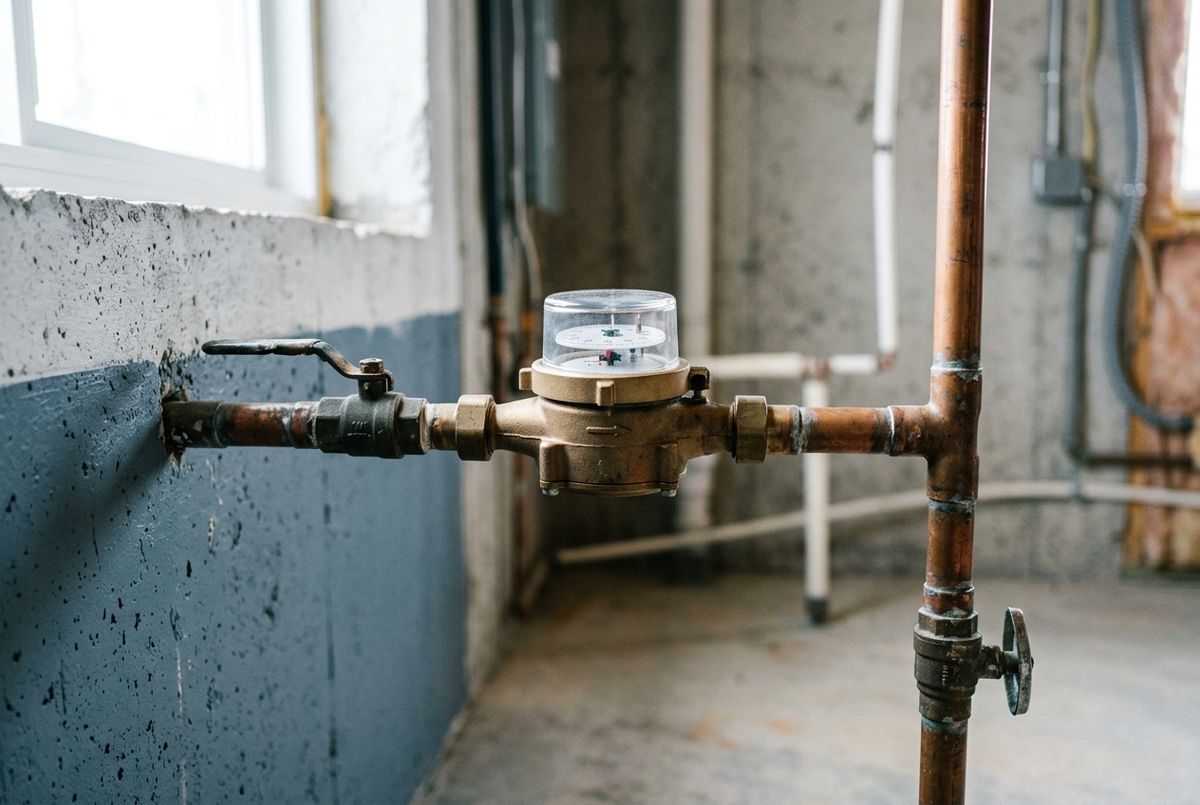
Short answer: Finding a hidden leak is a diagnostic job, not a repair, and the right first call depends on where the water is. If the leak might be on the buried water service between the curb and your house, phone 311 before you phone a plumber — The City of Calgary dispatches leak locators to that, and it costs you nothing. If the water is inside the house, that's a paid diagnostic, and no Calgary company publishes a price for it.
You've got evidence and no source. A bill that jumped, a damp patch on a finished wall, a meter that won't sit still, a strip of lawn that greens up first every spring. Every leak-detection page in this city says the same thing — advanced equipment, fast response, book now — and none tell you the thing that decides what this costs: whose pipe the water is coming out of.
Three places a leak hides, and who you call for each
Sort your symptoms before you dial. It decides whether this is a free City visit or a paid one.
Inside the house
A fixture, a supply line in a wall, a drain under a floor. Symptoms are local — a stain, a soft spot, a musty smell in one room. This is the paid diagnostic, and where equipment earns its keep: the alternative is opening drywall on a guess.
Out in the yard, on your water service
The buried line from the property line to the house. It often shows as nothing indoors — the water never passes your meter, so it may never reach your bill. Look for ground that stays unfrozen in winter, grass that greens early, or water you can hear at the main shut-off. Start with 311.
On the drainage side
A cracked or root-invaded sewer line, a failed joint under the floor. No pressure behind it, so it shows as smell, repeat blockages or sinking ground, not a spreading wet patch. Camera job, not a listening job. Why a drain that keeps blocking is a symptom →
If it might be the buried service line, phone 311 first
Almost no plumbing page in Calgary tells you this, and it can save the whole cost of a private investigation. The City employs leak locators, dispatched through 311 when a citizen suspects a leak. When they aren't at emergency main breaks, those crews run scheduled leak detection surveys.
Sources: The City of Calgary — Water service leaks on private property (PDF); Water service line leaks in Calgary. Confirmed August 2026.
The test that sorts your side from The City's is simple enough to follow. In The City's words, a leak on private property "can be determined by turning off the water at the shut-off valve. If the leak stops, repairing the leak is the homeowner's responsibility." A locator will contact you for access to the meter or main shut-off inside. So the free visit doesn't just confirm a leak — it tells you who owns it, which is the answer with a dollar figure attached. Where the property line sits, and why it decides the bill →
Know what the clock does. Once a leak on your side is confirmed, The City requires the repair within 15 days or a remedial order may be issued — a short runway once you've collected quotes. The City's guidance also warns these repairs "aren't typically covered by a basic homeowner's insurance policy," so check your wording before you assume.
Source: The City of Calgary — Water service leaks on private property (PDF)
The City lists three repair routes, and they are not the same job in your front yard. A service pull is trenchless, pulling a replacement service from the house to the valve with minimal digging. Excavating is a trench from the valve to the house. A spot repair uses hydrovac to expose the pipe at one defect. Ask which is being quoted: price and lawn damage differ enormously, and The City publishes no cost figures. Waiting isn't free either — The City notes an unrepaired leak can saturate soil, seep into your basement or a neighbour's, and damage your foundation.
Two free tests, before you pay anyone
- Run the meter test. Turn off every tap and water-using appliance — dishwasher, washer, ice maker, humidifier, irrigation timer — then watch the flow register. Still moving means a leak inside the house. Dead still, with symptoms you can't explain, points outside at the buried service.
- Do the toilet dye test. Food colouring in the tank, wait ten minutes, look in the bowl without flushing. Colour means the flapper is passing water. The City lists toilets first among common leak locations, ahead of irrigation, humidifier valves, taps and hose bibs.
Source: The City of Calgary — Water leaks and basic repairs. Confirmed August 2026.
For scale: The City's benchmark is that "a slow leak that takes a minute to fill a 500 ml pop bottle can add over twenty cubic metres a month." Against 2026 rates that's roughly $875 a year — and a failed flapper runs faster than that. The full calculation, line by line →
What the equipment does — and what it can't
Four tools do nearly all of this work, and knowing which your symptom calls for stops you paying for a truck roll that was never going to find it.
Acoustic listening
Amplifies the sound of pressurised water escaping a pipe, narrowing a leak behind a wall or under a slab to a small area. The benefit is subtraction — you open one square of drywall instead of chasing a stain across a room. It needs pressure behind the water, so: supply lines, not drains.
Thermal imaging
Reads surface temperature, so wet material inside a wall shows as a cool shape long before it shows as a stain. That maps how far the water travelled, so you know how much has to come out — but it sees the footprint, not the pipe itself.
Pressure and isolation testing
Closing off sections and watching whether pressure holds tells you which branch is losing water. Unglamorous, and often the step that saves the most money: ruling out three-quarters of the house makes the other tools cheap to point.
Camera inspection
A camera goes down drains and sewers, not through supply piping — so it answers cracked-pipe and root questions, not the damp-wall question. Right call when the symptom is repeat blockages or sewer smell. What a sewer camera actually shows →
You'll see accuracy percentages quoted for acoustic detection on Calgary plumbing sites — one ranking page claims "over 85% accurate", attributed to unnamed industry reports. We couldn't trace that figure to a published source, so we won't repeat it as fact. Ask instead what happens if the first attempt misses: whether you're billed again, and what the next step costs.
The claim appears on Mr. Rooter Plumbing of Calgary — leak detection, sourced to "Leak Detection Industry Reports" — not a traceable publication. Reviewed August 2026.
What makes a Calgary leak a Calgary leak
Most leak-detection content online was written for a housing stock that isn't ours.
Slab leaks are largely an imported idea
American content is dominated by slab leaks because much of the United States builds slab-on-grade, with supply piping cast into the floor. Calgary builds basements. The local equivalents are different: a supply line under a basement floor, an in-floor heating loop, and the buried service outside.
Freeze–thaw finds the weak joint
Calgary swings from a chinook to −30 °C inside a fortnight, and it's the repeated expansion, not the steady cold, that opens a marginal joint. The pipes that fail sit in barely-heated space — garage walls, crawl spaces, rim joists, the run out to a tap nobody drained in October. A leak surfacing in February often started as a freeze nobody noticed. Frozen and burst pipes →
Your home's era narrows the search
Pre-1960 inner-city homes commonly have galvanized supply and clay tile sewer, which is what mature boulevard roots go looking for. Roughly 1975–1997 may mean Poly-B. Post-2000 is generally PEX and ABS. Calgary's hard water works on valve seats and cartridges besides, which is why weeping shut-offs turn up earlier here than the manufacturer expected. Give a plumber your build year on the phone — it tells them where to look. What hard water does to Calgary plumbing →
What it costs, honestly
We read the Calgary pages currently ranking for leak detection in August 2026. Not one publishes a price for it. There's no authoritative public source either — no City department, trade association or consumer body tracks what it costs here. A confident average almost always comes from an American market where plumbing, housing and labour rates all differ.
What does exist are hourly rates Calgary companies publish about themselves: independents at $85–$120 an hour, companies at $95–$150, after-hours at $150–$250. A planning range for diagnostic time and nothing more — self-reported, unaudited, and not a quote.
Rates self-reported by Mr. Mike's Plumbing — plumber hourly rates in Calgary (updated December 2025). How Calgary plumbers price work →
One cost is published, and it surprises people. If the repair means shutting the water at the service valve on the property line, that valve is owned and operated by The City — neither you nor your plumber may operate it. You book it through 311.
| When | Single service | Full service |
|---|---|---|
| Regular hours (8 a.m.–4 p.m.) | $57.22 | $114.44 |
| Emergency / outside regular hours | $101.72 | $178.00 |
Sources: The City of Calgary — Water Interruptions and Disconnections; Service valves in Calgary.
Permits are the other line people brace for and often don't need. The City states a plumbing permit is not required to "repair a leak in a water distribution or drainage system." A permit is required when water and sewer lines in or around the home are replaced — which is what a full service replacement is. The homeowner permit is $112 plus a $4.50 Safety Codes Council fee, $116.50, and City fees rise every January 1.
Source: The City of Calgary — Homeowner electrical and plumbing permits. Confirmed August 2026. What you may do yourself in Alberta →
Four questions before you book anyone
- "Should I be calling 311 first?" If your symptoms point at the buried service and nobody mentions The City's leak locators, they're either not listening or not telling you.
- "What's the diagnosis cost, and what if you don't find it?" Get the number before the van leaves, get the not-found case answered, and ask whether the fee rolls into the repair.
- "Which tool are you bringing, and why that one?" A good answer connects your symptom to the method. "We'll isolate and pressure-test first" beats a list of equipment.
- "Can I have the finding in writing, with photos?" If real money follows, you want evidence of what was wrong — for a second quote, for your insurer, and for the next owner of the house.
None of it requires you to know anything about plumbing. If the symptom is pressure rather than water → · Back to Calgary plumbing basics →
Not sure which of the three cases you're in?
Describe what you're seeing and we'll tell you whether it's a 311 call, a ten-minute test you can do yourself, or a job worth paying to diagnose. If it's one of the first two, we'll say so — free, no booking attached.
Questions Calgary homeowners actually ask
Does The City of Calgary actually come out and look for a leak for free?
For the buried water service, yes — and hardly anyone knows it. The City runs leak locators who get dispatched through 311 when someone reports a suspected leak, and when they're not out at emergency main breaks they do scheduled leak detection surveys around the city. So if your symptom is out in the yard rather than in the house, that 311 call is the cheapest diagnostic available to you and it happens before you've paid anybody.
What they're sorting out is whose pipe it is. The City's own test is to shut the water off at the valve — if the leak stops, it's on your side and it's your bill. They'll usually want access to your meter or main shut-off inside to run further checks. Fair warning though: once a leak on your side is confirmed, you've got 15 days to get it repaired before The City can issue a remedial order, so line up quotes the same week.
My water bill is normal but I still think there's a leak outside. Is that possible?
Very. It catches people out constantly. Your meter sits inside the house, so water escaping from the buried service line out in the front yard never passes through it and generally never lands on your bill at all. You can have a genuinely serious leak running for a year with a bill that looks completely ordinary.
What you're looking for instead is the ground telling you. A strip of lawn that greens up two weeks before the rest, a patch that stays soft, or ground that stays oddly unfrozen in the middle of a cold snap. Sometimes you can hear it — go to your main shut-off with everything in the house off and just listen. Any of that is worth a 311 call.
What should a plumber charge me just to find a leak in Calgary?
Nobody publishes it, and we've looked. We went through the Calgary pages currently ranking for leak detection in August 2026 and not one of them puts a price on it. There's no independent source either — no City department or trade body tracks this. If you find an article confidently quoting an average, check where it's written; it's almost always American.
What you can anchor on is hourly rates Calgary companies publish about themselves — roughly $85 to $120 an hour for independents, $95 to $150 for companies, and $150 to $250 after hours. That's a planning range for diagnostic time, not a quote, and it's each company grading its own homework. The useful move is to ask on the phone what the diagnostic costs, whether it rolls into the repair, and what happens if they don't find it the first time.
Can they find a leak without cutting holes in my walls?
Often they can narrow it enough that you open one small area instead of guessing across a whole room, which is really what you're paying for. Acoustic listening picks up the sound of pressurised water escaping, thermal imaging shows the cool shape of a wet area behind a finished surface, and isolating and pressure-testing sections rules out most of the house before anyone points a tool anywhere.
But be realistic about it. None of that sees through drywall — it tells you where to look, and eventually something has to be opened to fix the pipe. Be sceptical of any promise of a no-damage repair. A camera, by the way, only goes down drains and sewers, not through your supply pipes, so if you're being sold a camera for a damp wall, ask why.
Do I need a permit to repair a leak?
Not for a repair. The City is clear that a plumbing permit isn't required to repair a leak in a water distribution or drainage system, the same way you don't need one to swap a tap or clear a blockage. So a straightforward fix doesn't come with paperwork.
Replacing the line is a different story. The City does require a permit when water or sewer lines in or around the home are replaced — and a full service replacement is exactly that. The homeowner permit is $112 plus a $4.50 Safety Codes Council fee, so $116.50, as of August 2026. Worth knowing because permit cost sometimes gets used to explain a big quote, and it's a small number.
Will my insurance cover a leaking water line under my lawn?
Read your policy before you assume, because The City's own guidance on service line leaks says plainly that these repairs aren't typically covered by a basic homeowner's policy. That's a City document saying it, not us.
The add-on that's usually relevant is a service line endorsement, which is the one covering the buried line against things like tree roots, corrosion and shifting earth. Whether you have it, and what it caps out at, is a five-minute phone call to your broker — and much better made now than the week you're staring at a trench in your front yard with a 15-day clock running.