Why your Calgary water bill jumped, and the $875 leak nobody adds up
Written for Calgary homeowners · Last reviewed August 16, 2026
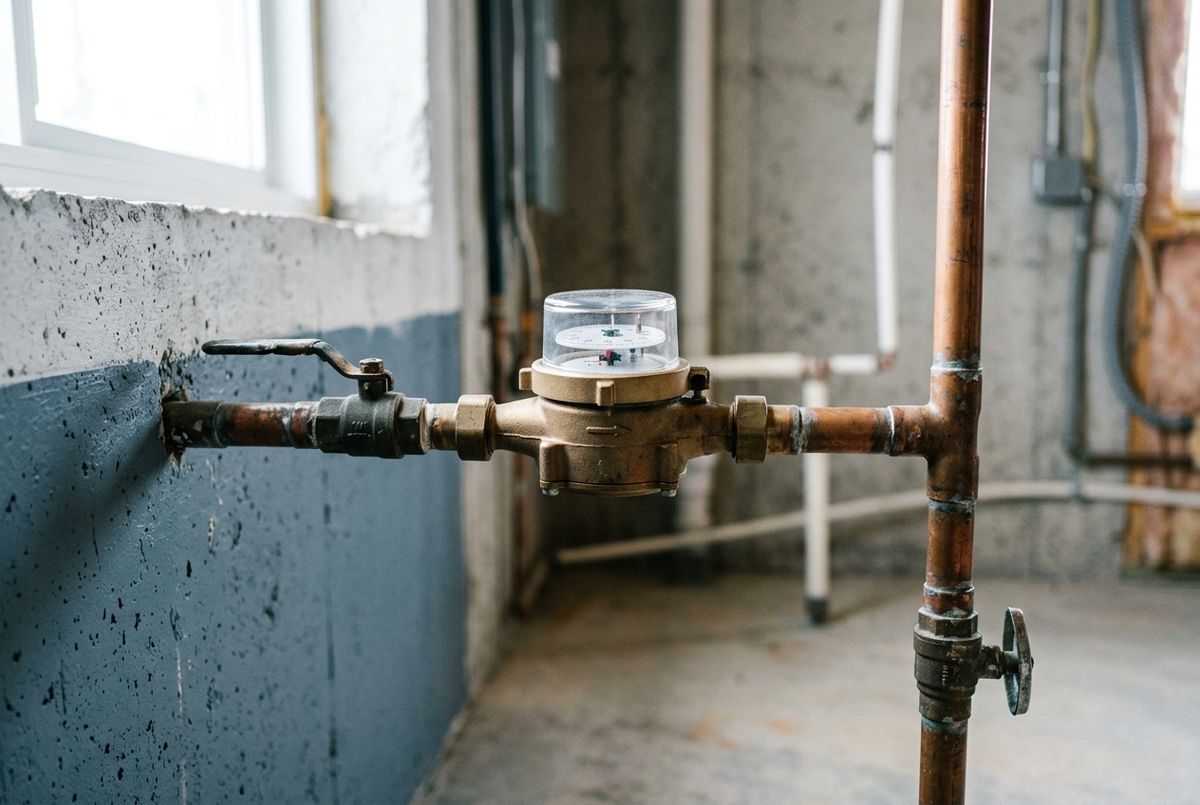
Short answer: if your Calgary water bill jumped and your habits didn't, you almost certainly have a leak you can't hear. The City says a slow leak that takes a minute to fill a 500 ml pop bottle adds over twenty cubic metres a month. At 2026 City rates that works out to roughly $72.92 a month, or about $875 a year — and the most common culprit is a toilet flapper that costs a few dollars and makes no noise at all.
That $875 figure is not a number The City publishes. It's the City's own leak benchmark multiplied by the City's own 2026 rates, and we're showing the arithmetic below so you can check it yourself rather than take our word for it.
The $875 calculation, shown in full
Two separate City of Calgary pages hold the two halves of this. Nobody appears to have put them together, which is odd, because the result is the reason a silent toilet is worth fixing this weekend rather than next spring.
| Step | Figure | Where it comes from |
|---|---|---|
| 1. Volume a slow leak adds | over 20 m³ per month | City of Calgary — "a slow leak that takes a minute to fill a 500 ml pop bottle" |
| 2. Water rate, 2026 | $1.7409 per m³ | City of Calgary published rate |
| 3. Wastewater rate, 2026 | $1.9050 per m³ | City of Calgary published rate |
| 4. Combined cost per m³ | $3.6459 | Our addition of rows 2 and 3 |
| 5. Monthly cost of that leak | 20 × $3.6459 = $72.92 | Our calculation |
| 6. Annual cost | × 12 = $875.04 | Our calculation |
One honest caveat on our own number: it assumes the leaked water also gets billed as wastewater volume, which is the case for an indoor leak going down a drain — a running toilet, a dripping tap. Water that passes the meter but never enters the drainage system, such as an outdoor tap or an irrigation line, is billed for water only. If you want to be conservative, the water-only cost is 20 × $1.7409 = $34.82 a month, about $418 a year. Even the conservative version is worth an afternoon of your time.
A leak on the buried service line outside the house is a different case again. In Calgary the meter sits inside the house, so that water never passes through it — a service line leak generally doesn't show on your bill at all. We cover how you actually find one at the bottom of this page.
And that's one slow leak. A toilet with a failed flapper can run considerably faster than a bottle a minute.
Check your meter — it takes ten minutes and costs nothing
Before you go looking for a leak, confirm you have one. Your water meter is the only impartial witness in the house.
- Turn off every water fixture in the house. Taps off, dishwasher and washing machine off, nobody flushing, ice maker off if you can, humidifier off, irrigation controller off. If you have a softener, note the time — you don't want it regenerating mid-test.
- Find the meter. In most Calgary homes it's in the basement, on the wall facing the street, usually near where the service line enters and often close to the hot water tank.
- Watch the flow indicator. Most meters have a small dial, triangle or star that spins on any flow at all. With everything off it should be dead still. If it's creeping, water is moving somewhere.
- Or take a reading and wait. If your meter has no obvious flow indicator, write down the reading, leave the house for two hours with everything off, and read it again. Any change is consumption you didn't cause.
- Know what the meter can and can't see. In Calgary the meter sits inside the house, so everything it registers is downstream of it — toilets, taps and fixtures, interior piping, the softener, the humidifier, the irrigation line. That's the leak a high bill is pointing at, and it's the one the rest of this page helps you find. Water escaping from the buried service line between the property line and the house is upstream of the meter: it never passes through, so it won't move the flow indicator and it won't inflate your consumption charge. That leak is real, but you find it a different way — covered at the bottom of this page.
- Narrow it down inside the house. If you can find the main shut-off valve just past the meter, close it and repeat the test. If the flow indicator stops, the leak is somewhere in the house past that valve and you can start room by room. If it keeps moving, the leak is in the short run between the meter and the shut-off itself.
- Do not touch the curb stop at the property line. That valve belongs to The City and homeowners and plumbers are not permitted to operate it. Breaking one turns a plumbing problem into a dig in your boulevard.
Sources: City of Calgary — water leaks and basic repairs; City of Calgary — water service lines.
The toilet dye test: start here, because it's usually the toilet
A silent toilet leak is the single most common cause of a mystery water bill, and it's the cheapest thing in your house to test. The flapper at the bottom of the tank is a rubber seal that hardens with age and with Calgary's hard water. Once it stops sealing, tank water trickles into the bowl continuously and drains away without a sound. Nothing looks wrong. The bill just goes up.
- Take the lid off the tank and put it somewhere it won't get knocked off.
- Drop in a few drops of food colouring — or a dye tablet if you have one. Any strong colour works.
- Don't flush. Wait 15 to 30 minutes. Go do something else.
- Look in the bowl. Colour in the bowl means the flapper is leaking, full stop. No colour means that toilet is fine — go test the next one.
- Flush to clear the dye so it doesn't stain.
Test every toilet in the house, including the basement one nobody uses. The unused ones are often the worst offenders, because a flapper that never gets exercised dries out and warps. A flapper is a cheap part and a straightforward swap. If the fill valve is also hissing or the water level is running over the top of the overflow tube, that's a second, separate problem — and if the toilet is old enough that parts are getting hard to find, replacing it usually pays for itself in water.
If it isn't the toilet, work down this list
- A water softener regenerating too often. Softeners flush themselves with water on a schedule or by volume, and Calgary's hardness means they cycle more than the manual's default assumes. A softener stuck in regeneration, or set to regenerate nightly when it doesn't need to, can move a startling amount of water quietly into your floor drain. Our hard water page covers what our water actually measures and whether you need one at all.
- A furnace humidifier. The bypass humidifiers fitted to a lot of Calgary furnaces drain continuously by design, and a stuck solenoid or a scaled-up pad makes that worse. If yours is still running in July, something's wrong.
- Irrigation. An underground sprinkler system with a cracked line or a stuck valve leaks into the ground where you'll never see it. So does a controller that's still watering on a schedule you forgot about. If your bill climbed in May and never came back down, start here.
- An outdoor tap. A frost-free sillcock that split over winter often leaks inside the wall only while the tap is open — you'll see nothing outside. Related: our outdoor tap page.
- A dripping tap or a weeping shut-off. Less dramatic than it sounds financially, but easy to fix and worth ruling out.
- An underground service line leak. The one with no visible water at all. Covered below, because it comes with a deadline.
If pressure has also dropped off while the bill went up, read those two symptoms together — that combination points at the supply side rather than a fixture. Our low water pressure page works through it.
Sanity-check your bill against the 2026 rates
Before assuming a leak, make sure you understand what you're actually being charged. Calgary residential water bills have five components, and only two of them move with how much water you use.
| Charge | 2026 rate | Moves with usage? |
|---|---|---|
| Water consumption | $1.7409 per m³ | Yes |
| Water fixed charge | $13.83 per 30 days | No |
| Wastewater consumption | $1.9050 per m³ | Yes |
| Wastewater fixed charge | $23.45 per 30 days | No |
| Stormwater | $17.00 per 30 days | No |
| Typical metered bill | $119.21 per month | — |
So $54.28 of a typical bill is fixed charges that arrive whether you use a drop or not. Subtract those from your total and what's left is the part a leak inflates. If your consumption charges are running $70 above what they were this time last year, that's roughly the profile of the twenty-cubic-metre leak in the calculation at the top of this page.
Flat rate versus metered matters too. Some Calgary properties are still on flat-rate billing rather than a meter, and The City states flat-rate customers pay roughly 68% more than metered customers. If you're on flat rate, a leak doesn't change your bill at all — which sounds like good news and isn't, because it means the leak runs undetected until it does structural damage or shows up as a wet spot in the yard. It also means that if your usage is average or below, switching to a meter is likely to save you money on its own.
The part nobody wants to tell you
As of August 2026, The City of Calgary's water leaks page makes no mention of bill credits, leak forgiveness or adjustments for water lost to a leak. We looked, because it's the first thing people ask. Some utilities elsewhere run leak-adjustment programs; we found nothing published for Calgary.
Absence of a published program is not the same as a flat refusal, so if your bill spiked badly it costs you nothing to phone 311 and ask. But plan on the assumption that the water you lost is water you paid for. That's precisely why the ten-minute meter check above is worth doing at the first sign of an odd bill instead of the third.
Source: The City of Calgary — water leaks and basic repairs, reviewed August 2026.
When the leak is underground: the 15-day rule
A leak on your buried water service line — the pipe running from the property line to your house — is the one exception to everything above, and the trap is that it usually isn't a high water bill. Your meter is inside the house, so a leak out in the yard is upstream of it. That water never passes through the meter, so it doesn't register as consumption and it doesn't land on your bill. Which is precisely why this kind of leak can run for months or years before anybody notices it.
What gives it away is the ground, not the paperwork. Look for a patch between the house and the street that stays wet or soft when nothing has been watered, a strip of lawn that greens up early in spring or never freezes through the middle of winter, water surfacing on the boulevard, or a drop in pressure at the fixtures. With every tap in the house off, put your ear to the main shut-off where the line comes through the wall — a steady hiss or rush of running water with nothing running is a strong signal. If any of that fits, call 311: The City dispatches leak detection to confirm it.
Two things you need to know. First, that pipe is yours. The City owns from the water main to your property line; you own from the property line to the house, and you pay all repair costs on the private-property portion, with the water meter as the one exception. The property line typically sits only a few metres in from the curb, so a leak under your boulevard grass can still be entirely your bill. We go through exactly where that boundary falls, and how to prove it, on our who-owns-which-pipe page.
Second, once a service line leak is confirmed, the clock starts. Under the Water Utility Bylaw the owner must repair it within 15 days, or The City may issue a remedial order. Repair methods are a trenchless service pull, a full excavation, or a hydrovac spot repair on a single defect — and The City publishes no cost figures for any of them. Fifteen days is enough time to get a second quote. It is not enough time to think it over for a fortnight first, so start phoning the day you get the letter.
Meter still spinning after the dye test?
Tell us what your meter did and what your bill did, and we'll tell you what's most likely and what it takes to find it — so you're not paying for a search you could have done yourself in ten minutes. If it turns out to be a flapper, we'll say so on the phone and you can keep the money.
Questions Calgary homeowners actually ask
How much can a running toilet really add to a Calgary water bill?
More than most people believe. The City's own benchmark is that a slow leak taking a minute to fill a 500 ml pop bottle adds over twenty cubic metres a month. Put that against the 2026 rates — $1.7409 per cubic metre for water and $1.9050 for wastewater — and you get about $72.92 a month, roughly $875 a year. That's our arithmetic on The City's figures, not a number The City publishes, but you can check both halves yourself.
And a bottle a minute is a slow leak. A properly failed flapper runs faster than that. The maddening part is that it makes no noise, so the first evidence is a bill you assume must be a billing error. It usually isn't.
How do I check for a leak using my water meter?
Shut off every water-using thing in the house — taps, dishwasher, washer, ice maker, humidifier, irrigation timer — then go and look at the meter. In most Calgary houses it's in the basement on the wall facing the street, near where the line comes in and often close to the hot water tank. Most meters have a little dial or triangle that spins on any flow at all. With everything off, it should be completely still.
If it's creeping, you have a leak. If your meter doesn't have an obvious flow indicator, write down the reading, go out for two hours, and read it again — any change is water you didn't use. One warning: don't touch the valve out at the curb. That one belongs to The City and neither homeowners nor plumbers are allowed to operate it.
Does The City of Calgary give you a credit if a leak blew up your bill?
Not that we can find. As of August 2026 The City's water leaks page says nothing about bill credits, leak forgiveness, or adjusting a bill for water lost to a leak. Some utilities in other cities run those programs; we found nothing published for Calgary, and we'd rather tell you that plainly than let you assume relief is waiting.
It costs nothing to phone 311 and ask about your specific bill, and you should. But budget on the basis that the water you lost is water you're paying for. That's the whole argument for doing the meter check the first time a bill looks wrong, rather than waiting to see if it comes back down next month.
My bill went up but I can't find any water anywhere. What else could it be?
Work through the quiet ones. A water softener regenerating far more often than it needs to — easy to miss, since it dumps straight into the floor drain, and our hard water makes softeners cycle harder than the default settings assume. A furnace humidifier with a stuck solenoid, still trickling in July. An underground sprinkler line with a crack or a stuck valve, which leaks into gravel where you'll never see it.
One thing your meter won't catch is a leak on the buried water service line. The meter sits inside the house, so water escaping out in the yard never passes through it and generally never shows on your bill at all. There you're looking for a patch of lawn that greens up early, ground that stays oddly unfrozen in winter, or water you can hear running at the main shut-off with everything in the house off. Call 311 if that sounds like yours — once a service line leak is confirmed it comes with a 15-day repair deadline attached.
I'm on flat rate, not a meter. Should I switch?
Run the numbers, because The City states flat-rate customers pay roughly 68% more than metered customers. If your household uses an average amount of water or less, a meter almost certainly saves you money on its own, before any leak enters the conversation.
The less obvious argument is diagnostic. On flat rate a leak costs you nothing extra month to month, which sounds like a win right up until the water that's been running for two years turns up as a soft spot in the yard or a damp foundation wall. A meter is the only thing in your house that will tell you water is moving when nobody's using any.
The City says I have a leak on my water line. How long do I have to fix it?
Fifteen days from confirmation. Under the Water Utility Bylaw an owner has to repair a confirmed service line leak within that window or The City may issue a remedial order. It's a short runway once you factor in getting quotes and booking a crew, so start calling the day the letter lands.
Ask each contractor which method they're proposing — a trenchless service pull, a full excavation, or a hydrovac spot repair on a single defect. The price and the damage to your yard are very different across those three, and The City publishes no cost figures at all, so two written quotes is the only way to know what fair looks like. Remember the pipe from the property line to your house is yours, and the property line is usually only a few metres in from the curb.