Should you get a sewer scope before buying a house in Calgary?
Written for Calgary homeowners · Last reviewed August 16, 2026
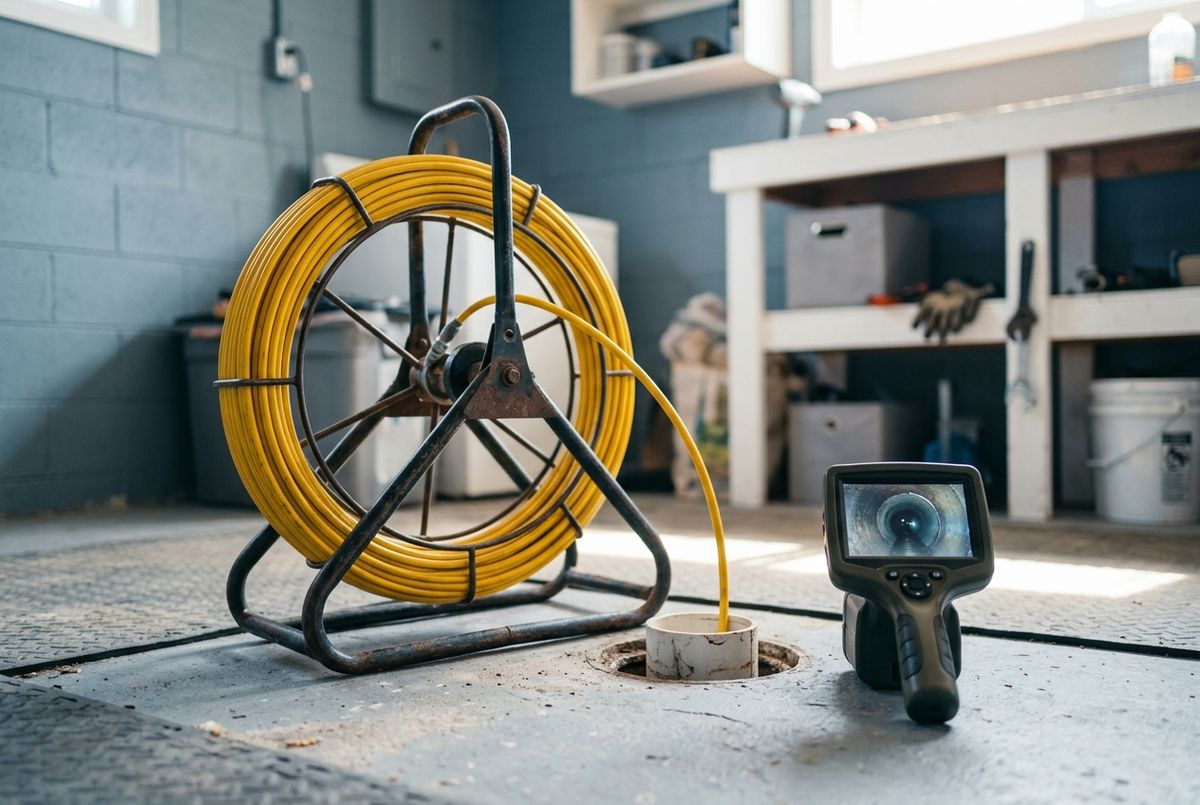
You've got an accepted offer, a conditions deadline in about a week, and a home inspection booked. The question is whether to spend more money on a camera down the sewer line before the clock runs out.
Short answer: A standard home inspection does not include the buried sewer line — it's a visual, non-invasive inspection that stops at the visible piping. A sewer scope is a separate service, and it's worth booking on a pre-1970 Calgary home, on any house with mature boulevard trees, and on anything with a finished basement. Nobody publishes authoritative pricing for it here, but as a planning frame it's a flat fee in the territory of an hour or two of plumber time. Book it the day your offer is accepted, because it's the one condition that regularly runs out of runway.
This page exists because almost nothing written on it in Calgary connects the three things that actually matter together: what the camera finds, what fixing it costs here, and who ends up paying once possession happens. Home inspectors write about the first, and then it stops.
What your home inspection does and doesn't cover
Home inspectors do a genuinely useful job and this isn't a criticism of them. It's a scope-of-work issue. A standard inspection is visual and non-invasive: your inspector will run the fixtures, watch drains empty, look at the accessible piping in the basement and mechanical room, check the floor drain, and flag anything visible — a corroded stack, evidence of past water on the floor, poor slope on exposed drain runs.
What that can't tell anyone is the condition of the pipe between your foundation wall and the City main under the street, which is buried, unlit, and typically 10 to 20 metres long. There is exactly one way to see it: put a camera down it.
Ask this question when you book your inspection, in these words: "Does your inspection include a camera inspection of the main sewer line to the street, and if so does it include recorded footage, a distance log and a written report?" Some Calgary inspectors offer it as an add-on and some subcontract it. If the answer is no or vague, book a plumber separately — and try to get both on site the same day so you're not spending two of your condition days on scheduling.
When it's clearly worth it in Calgary
This city's housing stock came in waves, and each wave has a sewer signature. That makes the decision less of a coin flip than it looks.
| Situation | Likely line | Worth scoping? |
|---|---|---|
| Pre-1970 inner-city bungalow or two-storey | Clay tile with mortared joints; cast iron inside | Yes — this is the core case |
| Mature elms or poplars on the boulevard or front yard | Whatever it is, roots have had decades to find it | Yes, regardless of era |
| Finished or developed basement | Any | Yes — a backup here is a rebuild, not a mop-up |
| 1975–1997 suburban | Often serviceable, but three to five decades of settlement and use | Worth it, especially with a developed basement |
| Recent build, no mature trees, unfinished basement | Modern PVC | Optional — lower odds, but not zero if there's been landscaping or a settlement history |
| Any house where the seller has done a recent "drain cleaning" | Unknown — and that's the point | Yes. Ask why it needed doing |
That last row deserves a sentence of its own. A recently augered line isn't reassuring; it's a signal. Augering clears a blockage without addressing the reason it blocked, so a line that was cleared last month is a line that was blocking last month. Why a repeat backup is a symptom rather than bad luck covers the distinction.
What the camera actually shows — and what it can't
Pipe material and era
Clay tile, cast iron, ABS or PVC are all recognisable on camera, so you find out what you're buying rather than inferring it from the year of construction — which is often wrong, because lines get partially replaced.
Root intrusion, and how bad
You see whether it's fine hairs at one joint or a mass occupying most of the bore, which is the difference between a maintenance item and a repair you should be negotiating over.
Bellies, offsets and cracks
A sag holding standing water, a joint that's shifted, a longitudinal crack — all visible, and all things that tell you how the line will behave over the next decade rather than just today.
Distance to each defect
A proper scope logs how far down the line each finding sits, which is the number that decides whether a repair is on your side of the property line or The City's. Insist the distances are in the written report.
What it can't tell you
Depth of the pipe, exact soil conditions, or what's outside the pipe wall. Those drive excavation cost, so a scope tells you that there's a problem and roughly where — not precisely what the dig will cost.
Where it can't go
Cameras get stopped by hard blockages, tight bends and collapsed sections. Ironically, "couldn't complete the run" is itself an important finding — and it's a reason to ask for the footage rather than a summary.
One practical note: the camera needs a way in. Most Calgary homes have a cleanout in the basement near where the sewer exits the foundation. If there isn't an accessible one, the plumber may need to pull a toilet, which takes longer and needs the seller's permission. Flag it on the phone when you book so nobody wastes a trip you're paying for.
The Calgary rule that turns a finding into your bill
This is the part missing from every home-inspection page on this topic, and it's the part that decides the size of the number.
In Calgary, The City owns the water and sewer service lines from the mains under the street up to your property line. The homeowner owns the run from the property line to the house and pays all repair costs on that private-side portion. And the property line typically sits only a few metres in from the edge of the curb or sidewalk — not at the road. What that repair actually involves, and the permits it triggers if the dig reaches the boulevard, is on our sewer line repair page.
Source: The City of Calgary — Water service lines; see also Water and sewer connections. Current as of August 2026.
So when a scope report says "offset joint with root mass at 12 metres," the follow-up question is where the front property line falls. Pull the Real Property Report from the seller's disclosure package — it's a legal survey and it dimensions the parcel boundary. If the defect is inside the line, it's the buyer's problem the day possession happens. Nobody at The City is coming to fix it, and nobody is reimbursing you for it. Our full explainer on who owns which pipe, and how to prove it goes through the geometry properly.
What that means in a negotiation: a scope finding on the private side is a defect in the property you're buying, in the same category as a failing roof or a cracked heat exchanger. It's not an act of God and it's not the municipality's to sort out. That framing is what makes it negotiable.
Turning a finding into a number, then into a deal
- Get the footage and the written report, not a verbal. "The plumber said it looked rough" carries no weight with a seller's agent. A dated report with distances, a material identification and a still image does.
- Get a written repair quote inside the conditions period. This is the step most buyers skip and it's the one that decides the outcome. You want a plumber's fixed-price quote for the actual recommended repair — that becomes the number in the conversation instead of two agents trading guesses.
- Ask what method the quote assumes. A trenchless pull, a full excavation and a hydrovac spot repair on a single defect are very different jobs with very different prices and very different damage to the yard. A quote that doesn't say which one it is isn't finished.
- Decide what you're actually asking for. A price reduction, the seller completing the repair before possession, or a holdback in trust. Reduction is cleanest; seller-completed repairs need a permit condition and proof of inspection or you inherit unpermitted work.
- Talk to your lender and insurer if it's significant. A known defect can matter to both, and finding that out during conditions is the point of having conditions.
- Keep everything for the file. The report, the quote and the correspondence. If you buy the house and the line fails in three years, that file is what your insurer, and possibly your lawyer, will want.
On cost, we'll be straight rather than useful-sounding: there is no authoritative public source for Calgary plumbing prices, and every figure published online is a company's self-report. Sewer repair spans from a few hundred dollars for a clean and a re-scope to one of the most expensive single repairs a Calgary house can hand you — depth, length, surface above the line and access change it by orders of magnitude. That's why you get a written quote on the actual pipe rather than trusting a range from a web page, including ours. For hourly rates and how to read a quote, see what Calgary plumbers charge.
Timing it inside a conditions period
Calgary conditions periods commonly run about seven to ten days, sometimes five. Here's how the scope fits without eating the whole thing.
- Book the day the offer is accepted. Not after the home inspection report lands. The scope and the inspection can run the same day, and often should.
- Confirm access in writing through your agent. The two things that turn a booking into a wasted trip are an occupied house nobody warned, and no accessible cleanout.
- Ask about the basement finish level up front. If the cleanout is behind drywall or under flooring, the plumber needs to know before they arrive.
- Leave two days at the end. You need time to get a repair quote after the finding, and quotes take a day or two even when everyone's motivated.
- If it's tight, ask for a short extension early. Asking on day two because you're waiting on a specialist reads as diligent. Asking on the last afternoon reads as disorganised, and sellers say no.
For agents
If you're representing buyers in Calgary's inner city, this is a cheap condition that prevents an expensive post-possession phone call. Three things are worth building into your process: ask sellers' side for the Real Property Report early so the property line is available when a distance reading appears; treat "recommend monitoring" as a real disclosure item rather than a pass; and know that the private-side rule means a boulevard-adjacent defect is your buyer's cost, not The City's, which is the piece most clients get wrong on their own.
Feel free to link this page for clients — free to read, no email gate, and it cites The City directly so nobody takes our word for anything. Our main Calgary plumbing guide covers the rest of the housing-stock issues that come up in a purchase.
Conditions clock running?
Tell us the address, the year built and your condition date. We'll say honestly whether a scope is worth it on that house, and if it is, get out with a camera and give you footage, distances and a written report you can put in front of a seller's agent.
Questions Calgary homeowners actually ask
My home inspector is coming Thursday. Doesn't that cover the sewer?
No. A standard home inspection is visual and non-invasive — the inspector will run water, look at the visible drain piping, check the floor drain and note anything obvious. None of that tells you anything about the pipe buried between the foundation and the street, which is the part that costs real money.
A sewer scope is a separate service with a separate camera and usually a separate person. Some Calgary inspectors offer it as an add-on and some don't. If yours doesn't, book a plumber to do it, ideally the same day so you're not burning two days out of a conditions period that's probably only seven to ten days long anyway.
The house is a 1958 bungalow in Renfrew with big elms out front. Is that a yes?
That's the exact profile where we'd say don't skip it. Inner-city Calgary homes from before about 1970 typically have clay tile sewer lines with mortared joints, and mature boulevard elms and poplars find those joints reliably. Cast iron from the same era corrodes from the bottom of the pipe upward, so it can look serviceable right up until it isn't.
Add a finished basement and the case gets stronger, because a backup in a developed basement is a drywall-and-flooring event rather than a mop-up. On a 2015 build in the far northwest with PVC in the ground and no mature trees, the odds are much lower — still not zero, but that's a judgment call rather than an obvious yes.
It came back with roots. Do I walk away?
Usually not. Roots in a clay line is a common Calgary finding, and it sits on a spectrum — a few fine hairs at one joint is a maintenance item, a mass that's blocking most of the pipe with the tile displaced around it is a replacement conversation. The footage tells you which one you're looking at, and so does the plumber's written summary.
What you do with it is negotiate rather than panic. Get a written repair quote inside the conditions period so you're arguing from a real number instead of a fear, and decide what you want: a price reduction, the seller fixing it before possession, or a holdback. Walking away over roots is often leaving a perfectly good house because of a repair that could be handled properly.
Who pays if the bad part is out near the road?
You do, in most cases, once you own the house. In Calgary The City owns the water and sewer service from the mains to your property line and the homeowner owns it from the property line to the house — and the property line usually sits only a few metres in from the curb or sidewalk, not at the road. So a defect under the boulevard grass can still be entirely on the private side.
That's why the distance reading on a scope report matters so much. If the camera logs a break at 12 metres and the survey puts your front property line at 9, the buyer inherits that bill. Get the distance recorded in the report, not just described in conversation, and check it against the Real Property Report while you still have conditions in place.
The report says 'recommend monitoring.' What does that actually mean?
Honestly, it usually means the pipe isn't failing today but has features that will get worse — a slight belly holding a bit of water, minor root entry, some scaling in cast iron, an offset joint that's still passing flow. It's a real finding, not a formality, but it isn't a defect you can hand to a seller and ask for money.
Treat it as a maintenance schedule you've been handed for free. Ask the plumber what specifically they'd watch and how often, plan on a re-scope in a couple of years, and budget accordingly. And if you're buying with a developed basement, that's also the moment to price out backflow protection — a valve is cheaper than a claim.
What does a scope cost, and can I get one inside a five-day condition?
Nobody publishes an authoritative price for this in Calgary — every figure online is a company's own self-report. As a planning frame, it's typically a flat inspection fee in the territory of an hour or two of plumber time, and Calgary companies self-report hourly rates from roughly $85 to $150. Ask for the flat fee on the phone, and ask specifically whether it includes the recorded footage and a written report, because a verbal "looked fine" is worth very little in a negotiation.
Five days is tight but workable if you call the day the offer is accepted. Two things get you turned away at the door: no access to a cleanout, and a tenant or seller who wasn't told you were coming. Have your agent confirm access in writing, and if the house has no accessible cleanout, say so on the phone so the plumber brings the right kit or pulls a toilet.